Also available via chat in the evenings until 9:00 PM
Instant lease agreement
Fynanch is recommended by

Also available via chat in the evenings until 9:00 PM
Instant lease agreement
Fynanch is recommended by
Also available via chat in the evenings until 9:00 PM
Instant lease agreement
Fynanch is recommended by

When you think “king of the road”, you think of Scania. The Swedish brand is the most popular among drivers, not least because of the V8 engines found in the top models. It is no coincidence that in the election for the prettiest truck in the Netherlands in Assen, the vast majority of the finalists are always a Scania.
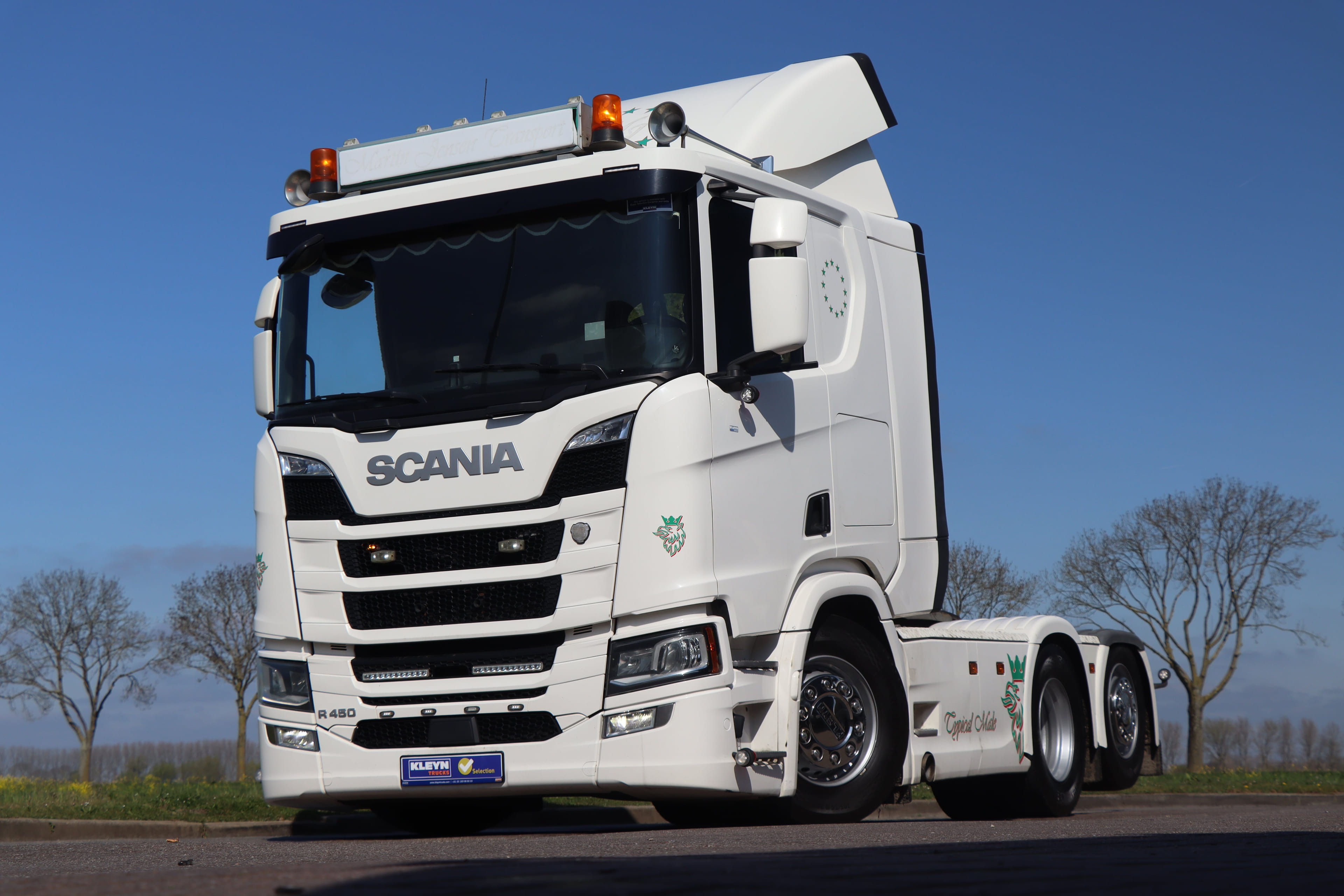
If you want to lease a truck that performs day in and day out without any surprises, Scania is the obvious choice. This brand has built an almost legendary reputation among drivers and business owners. Scania is reliable, sturdy, and built with one clear goal in mind: to cover as many kilometers as possible as efficiently as possible. Scania trucks are known for their long service life and high residual value—two qualities that aren’t just desirable when leasing, but also have a significant impact on total cost of ownership.
Where Scania truly stands out is its focus on the powertrain. The engines, transmissions, and axles are fully optimized to work together. This ensures low fuel consumption and smooth handling, even under heavy use—whether it’s long international hauls, domestic distribution, or heavy-duty transport. Scania offers configurations that are precisely tailored to the work you want to do with the truck. That customization is deeply rooted in the brand’s DNA. In addition, Scania is known for its focus on the driver and on sustainability. The interior is ergonomically designed, quiet, and comfortable. This helps reduce fatigue and enhances driving pleasure. At the same time, Scania has been investing for years in more efficient internal combustion engines, alternative fuels, and electrification. So when you lease a Scania, you’re not only choosing a powerful truck for today, but also a brand that’s ready for the demands of tomorrow.
Scania was founded in 1891. What was the first product they made? Bicycles! They were even ultra-modern for their time—the front wheel was just as big as the rear wheel. Scania didn’t design these bicycles themselves; they were built under license from the British company Rover, which, like Scania itself, would later go on to manufacture motor vehicles. In 1903, Scania built its first passenger car, followed two years later by its first commercial vehicle.
A little further away in Sweden, another company was founded in 1891: Vagnfabriks Aktiebolaget i Södertälje, or Vabis for short. They started out building railroad cars, but built their first car in 1897 and their first truck in 1902. In 1911, the two companies joined forces and merged to form Scania-Vabis.
The name Scania-Vabis was used until 1969, but that year saw a merger with another Swedish company: aircraft and automobile manufacturer Saab. From then on, the trucks were sold under the Scania name. The name change also coincided exactly with the introduction of the new 0 Series.
In 1995, Saab was acquired by General Motors, and Scania continued as an independent company. Plans for a merger with Volvo were well advanced, but the merger was blocked by competition authorities: in some Scandinavian countries, the market share would have exceeded 90%!
In 2014, all of Scania’s shares came under the ownership of the Volkswagen Group. Together with its sister brands MAN and International, it now forms Traton, the truck division of VAG.
Although it is a Scandinavian company, its largest factory is not in Sweden, but in Zwolle. There are also production facilities in Meppel. Cabins are no longer built there, but plastic parts are spray-painted. Production takes place in the Netherlands. This was a key factor in the Dutch military’s decision to have more than 3,000 trucks built here.
Other cities where Scania trucks—or parts thereof—are built include Södertälje, Oskarshamn, and Luleå (Sweden); Angers (France); São Bernardo do Campo and São Paulo (Brazil); and Tucumán (Argentina). In China, construction is currently underway on a dedicated factory. Scania buses are built in Poland and Finland.
The merger with Saab was reversed in 1995. After a close relationship with Volvo, Scania has been part of the Volkswagen Group since 2008. This makes it not only a sister company to MAN—with which it collaborates extensively on development—but also to Porsche and Audi.
We bet you’ll find the Scania you’re looking for with us! We’re happy to help you get started. All you have to do is focus on your business. We’ll take care of the rest. We’ll advise you on the best truck and lease contract for you. That way, you could be on the road in your new truck in as little as 48 hours.